Welcome to Grand County! Learners are immersed in a fictional Grand County to practice selecting the right partners for their coalition, identifying goals and action planning, and practicing simulated activities before performing them in person. The self-paced modules support externalization and articulation by sharing results with their implementation specialists for in-person discussion. This blended learning approach helps Implementation specialists provide high-quality coaching to create confident, competent practitioners.
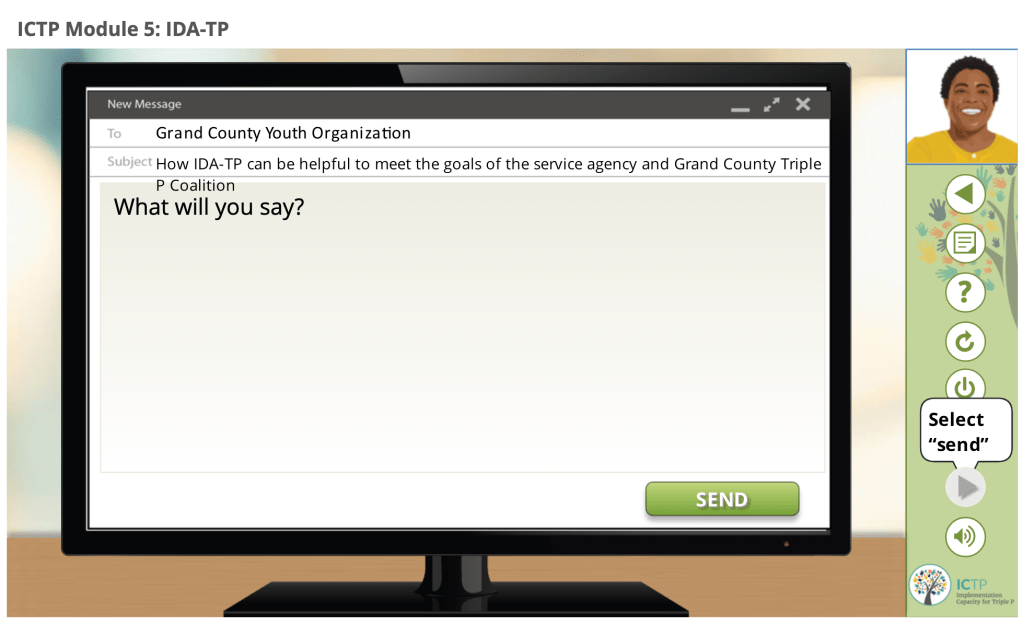
Throughout the modules, opportunities to articulate their thoughts, next steps, and responses allow Implementation Specialists to identify concerns and promote learners’ confidence through these interactions.
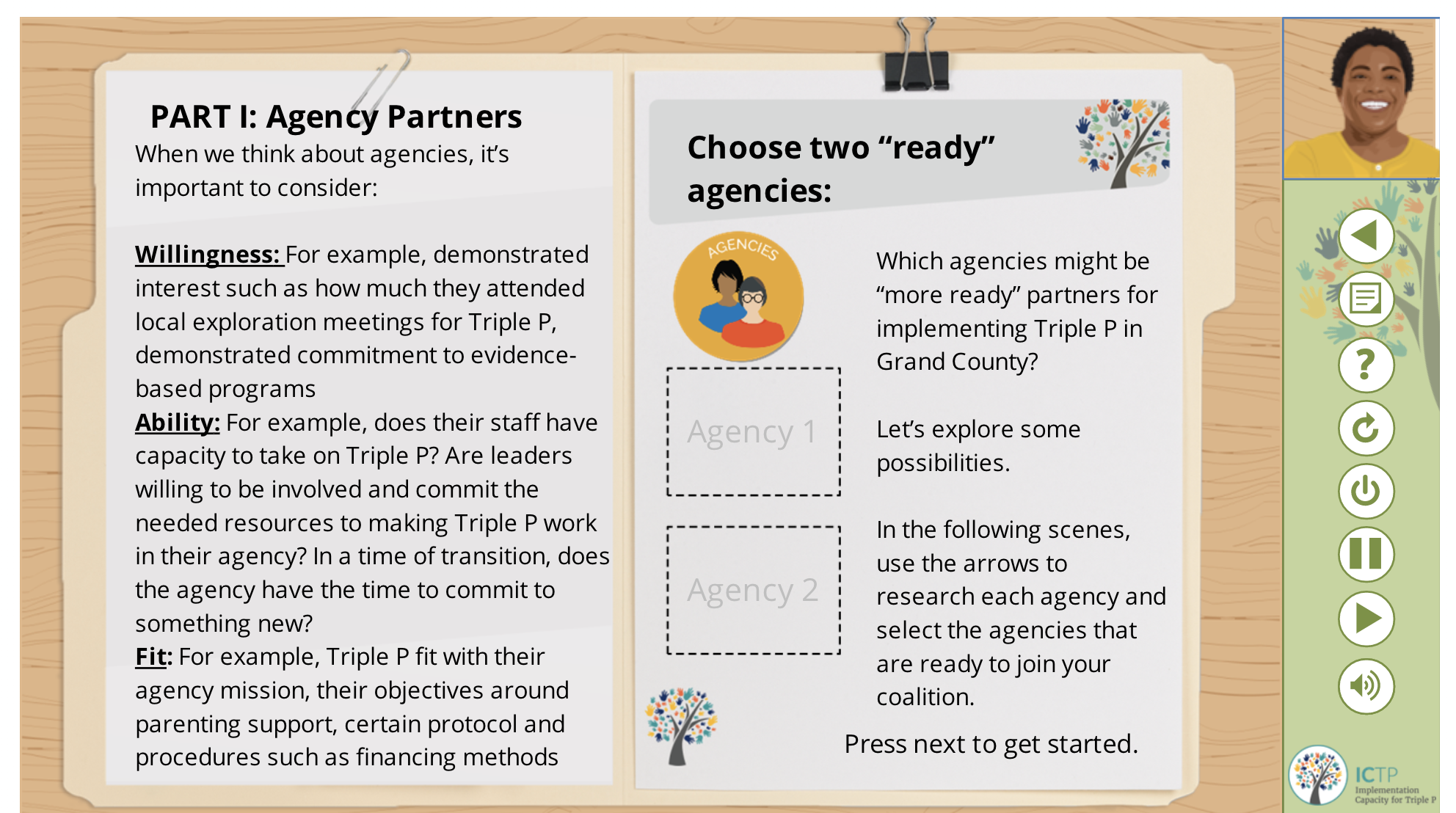
Simulated activities closely reflect the process practitioners will encounter. In a safe space to practice, learners can try different techniques and work through a variety of scenarios to get immediate feedback.
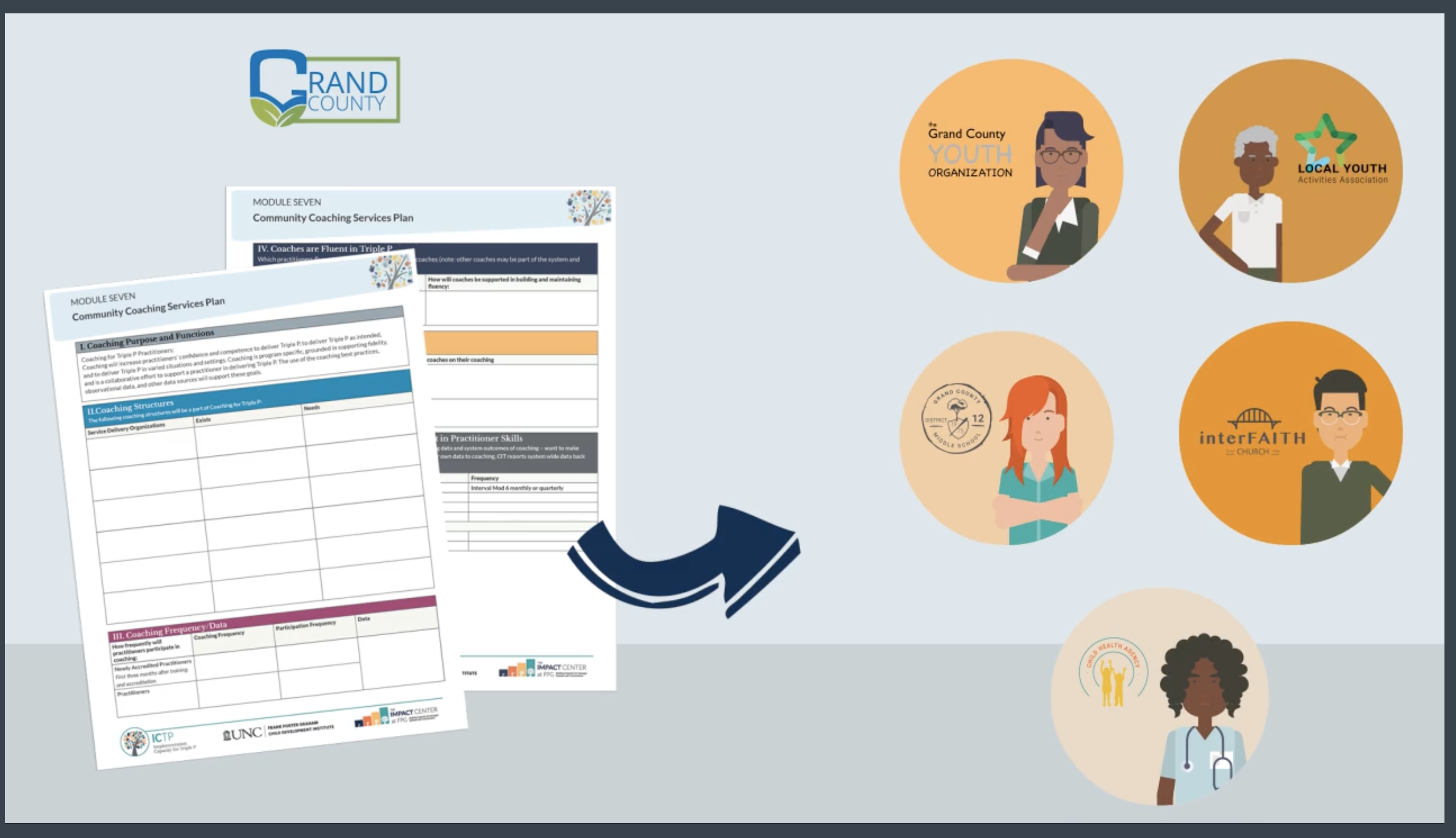
The modules diversify activities to provide ample opportunities for externalization and develop their own understanding of the intervention. In-person collaboration with the Implementation specialist solidifies their knowledge.
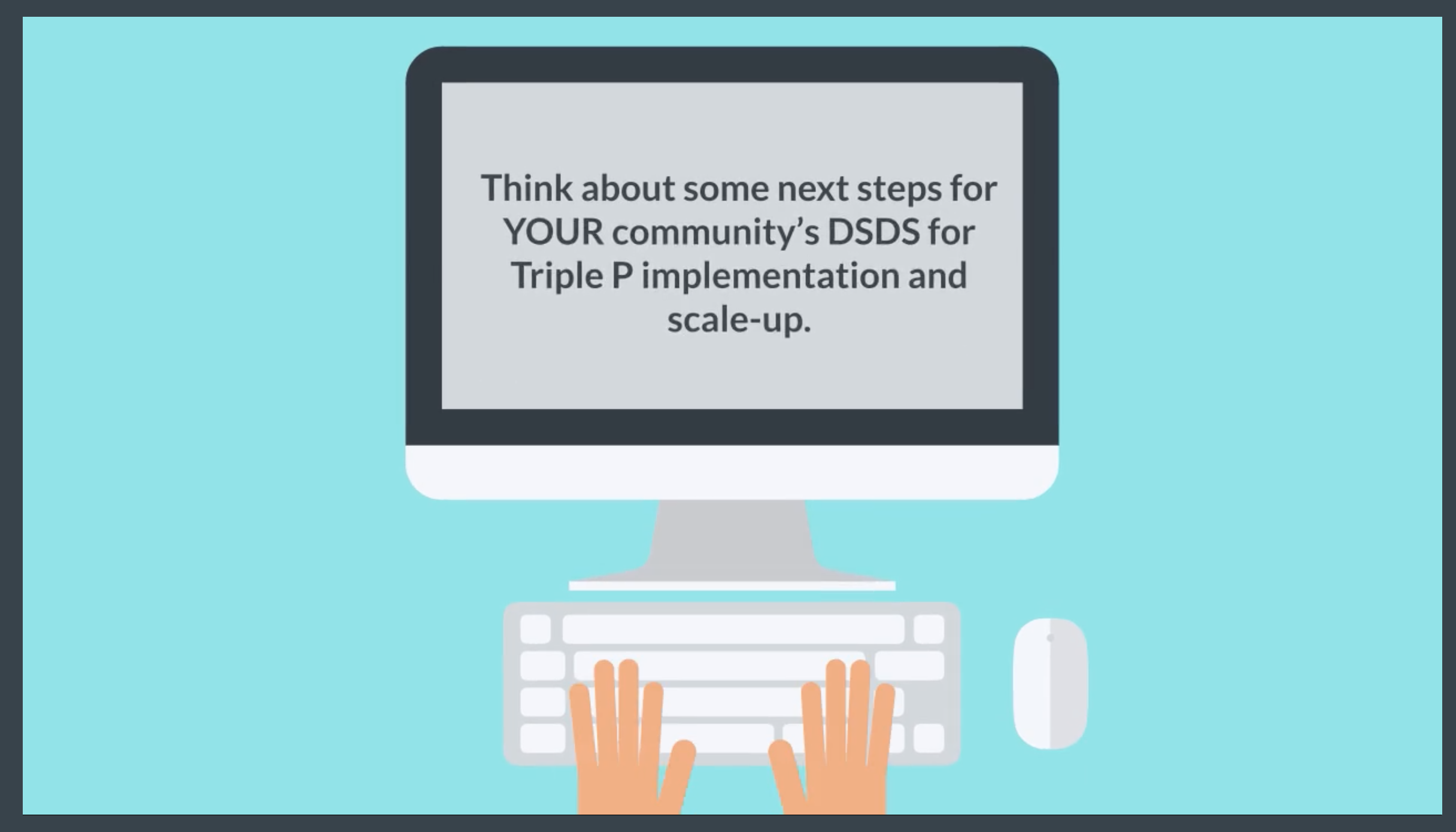
When designed effectively and intentionally, externalization and articulation in online learning environments promote individual knowledge, highlight trouble areas and support social learning and collaboration.
References
Supporting articles for externalization and articulation effectively used in blended learning
Adaptable scripting to foster regulation processes and skills in computer-supported collaborative learning Wang, X., Kollar, I., & Stegmann, K. (2017). Adaptable scripting to foster regulation processes and skills in computer-supported collaborative learning. International Journal of Computer-Supported Collaborative Learning, 12(2), 153-172.doi:https:/ /doi.org/10.1007 /s11412-017-9254-x
Formative Interventions for Expansive Learning and Transformative Agency
Annalisa Sannino, Yrjo Engestrom & Monica Lemos (2016) Formative Interventions for Expansive Learning and Transformative Agency, Journal of the Learning Sciences, 25:4, 599-633, DOI: 10.1080/10508406.2016.120454 7
Efficacy of video-based teacher professional development for increasing classroom discourse and student learning Gaowei Chen, Carol K. K. Chan, Kennedy K.H. Chan, Sherice N. Clarke & Lauren B. Resnick (2020) Efficacy of video-based teacher professional development for increasing classroom discourse and student learning, Journal of the Learning Sciences, 29:4-5, 642-680, DOI:10.1080/10508406.2020.1783269
 jmichin